
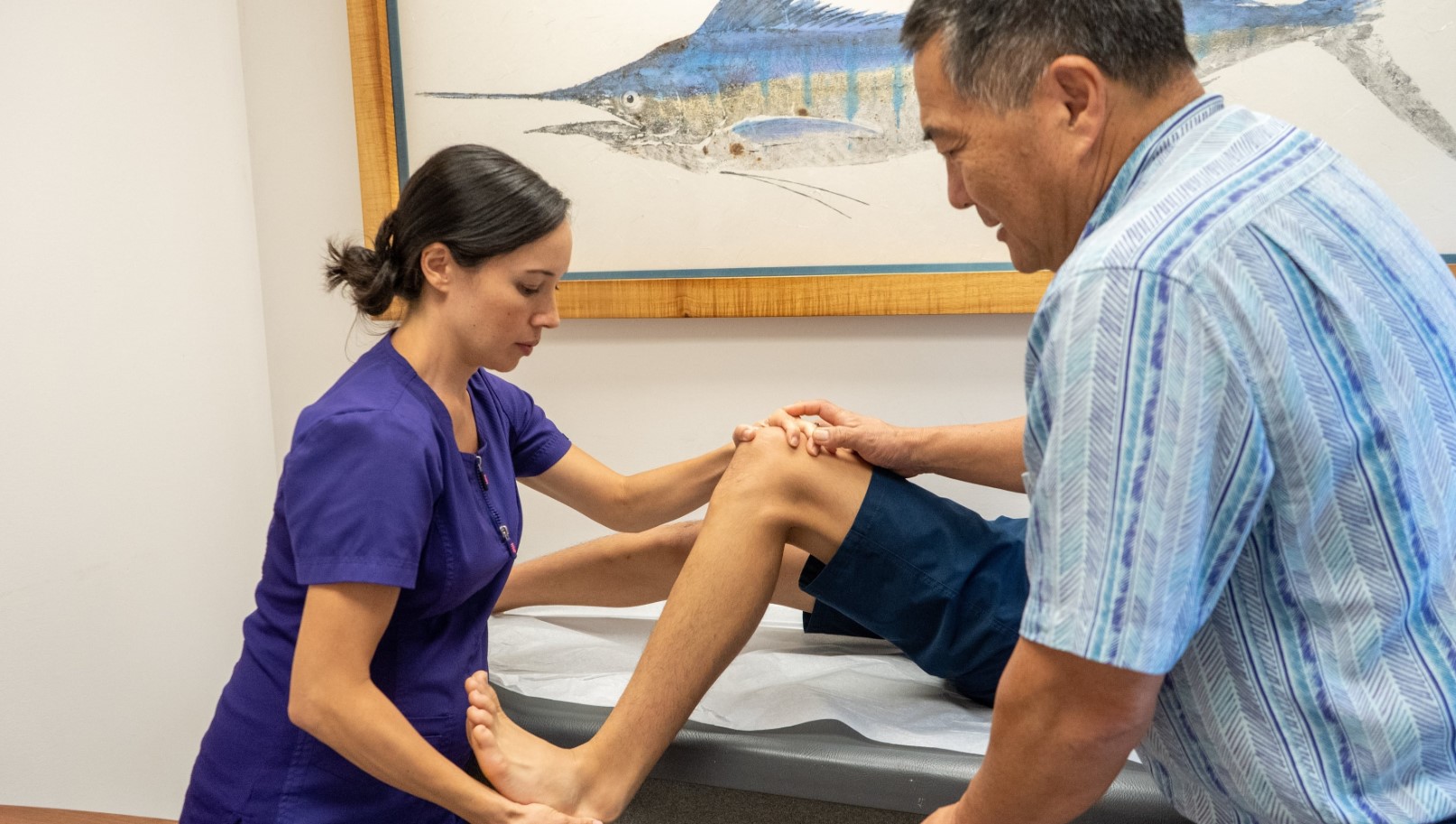
Casting, Splinting, and Bracing in Hilo, HI
Protecting an injured bone or joint is one of the most important steps in healing. At Peter A. Matsuura, MD., Dr. Peter A. Matsuura provides expert casting, splinting, and bracing in Hilo, HI to stabilize fractures, sprains, tendon injuries, and post-surgical joints. With the right support, your body can heal in proper alignment while you stay as comfortable and active as possible.
How Immobilization Helps You Heal
When a bone is broken or a ligament or tendon is injured, movement can delay healing or cause the injury to shift out of place. Casts, splints, and braces hold the injured area steady, reduce pain and swelling, and protect it from further damage. They are used on their own for many non-surgical injuries and are also an essential part of recovery after fracture surgery and other orthopaedic procedures.
Casting
Casts provide rigid, full support and are commonly used for fractures of the arm, wrist, leg, and ankle. Dr. Matsuura will select the right material and fit for your injury and explain how to keep your cast clean, dry, and comfortable.
Splinting
Splints offer firm support but are not fully enclosed, which allows room for swelling in the early days after an injury. Splints are often used for new fractures, finger injuries, trigger finger, and wrist conditions such as carpal tunnel syndrome.
Bracing
Braces provide adjustable support and are frequently used for sprains and strains, ligament injuries, arthritis, and recovery after knee surgery. Many braces can be removed for bathing and exercise as your healing progresses.
Caring for Your Cast, Splint, or Brace
- Keep the device clean and dry unless told otherwise
- Elevate the injured limb to help reduce swelling
- Never insert objects inside a cast to scratch an itch
- Call our office if you notice increasing pain, numbness, tingling, color changes, or a foul odor
Follow-up visits and in-office X-rays help us confirm that healing is on track. To learn more about our full range of care, visit our orthopaedic services page or call (808) 969-3331.
Casting, Splinting, and Bracing FAQs
What is the difference between a cast and a splint?
A cast wraps completely around the injured area for rigid support, while a splint supports only part of the limb and allows room for swelling.
How long will I need to wear a cast?
It depends on the injury and how quickly you heal. Many fractures require a cast for several weeks, followed by a splint or brace.
Can I get my cast wet?
Most casts should be kept dry. Dr. Matsuura will let you know how to protect your cast while bathing.
What should I do if my cast feels too tight?
Elevate the limb and call our office right away if you have increasing pain, numbness, tingling, or color changes in your fingers or toes.
Can I remove my brace?
Many braces can be removed for bathing or exercise, but you should follow Dr. Matsuura’s specific instructions for your injury.
Are braces used after surgery?
Yes. Braces are commonly used after knee, shoulder, and ankle surgery to protect the repair during early healing.
Will I need physical therapy after my cast comes off?
Many patients benefit from guided exercises after immobilization to restore strength and motion.